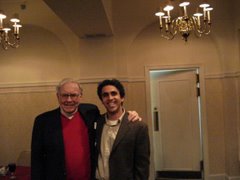
Anyone fortunate enough to have invested during the bull market that began in 1982 will find easy to say "buy and hold forever." Indeed, for almost twenty years, the market had one general direction - up, and anyone who bought and forgot did well for nearly 18 years. Warren Buffett has described the bull market that began in 1982 as a period unlike any other for the markets and that it is highly unlikely or quite some time before the U.S. markets experience that again. And although Buffett is famous for his "our favorite holding period is forever" line, it wasn't until later in his investing career - when Berkshire's capital was enormous - that this approach really made the most sense for him and Berkshire Hathaway.
Consider that from 1983 until 1999, the average annual return on the S&P 500 was 15.7%, assuming the reinvestment of dividends. A similar return like this for the Dow Jones beginning in 2008 would mean that the Dow would be trading over 139,000 in 2024!
It is in this context that I found Active Value Investing: Making Money in Range Bound Markets by author and portfolio manager Vitaliy Katsenelson an interesting and insightful read on understanding the long mood swings of Mr. Market. One should not assume that the word "Active" in the title to suggest market timing - this is the last thing Vitaliy is concerned with. In fact he readily admits that trying to time the market is a fools game. Instead his focus on using fundamental valuation techniques - discounted cash flow analysis, price to earnings models, and margin of safety - to take advantage of range bound markets.
Any serious participant in the stock markets is well aware that markets trade in in ranges some periods longer than others. During the 16 year period beginning 1966 and ending in 1982, an investment in the Dow Jones index in 1966 would have been worth about the same sixteen years later. Hovering around 1000, the Dow remained around 1000 in 1982. Whatever dividends you earned were wiped out by inflation during that time. A simple buy and hold approach during that time would have produced an annual rate of return of zero percent. Yet during that sixteen year period occurred one of the most opportunistic buying opportunities in the U.S. Beginning in 1974, as Buffett so famously quipped, "I was selling at 3 times earnings to buy stocks at two times earnings."
Active Value Investing discusses how the prudent use of fundamental analysis allows to take advantage of such opportunistic times in the market. Focusing on the only three variables that really matter in a business - value, quality, and growth - investors can learn how intelligently exploit Mr. Market's mood swings. Unlike most great investing books that are focused on the buying process, Active Value Investing takes a very close examination of the selling process, something I find to be the most misunderstood area of investing. Make no mistake, if you can't buy at the right time, knowing when to sell won't mean much. Not only does Vitaliy walk you through his framework of knowing when to buy stocks, but he also takes a deep look at selling stocks, a topic not given enough discussion among value investors. Active Value Investing looks to change all of that.
We all realize that the markets are never a smooth ride and that market timing is mere folly. The key to taking advantage of the market's swings - buying on the stalls and selling on the surges - is to focus on valuation of individual securities. Indeed it is the price in which you buy that ultimately determines your return when you sell. Understanding what to look for in businesses and how to value them is an absolute must if you hope on succeeding in the markets for a meaningful period of time. Active Value Investing helps steer you in the right direction.
Sunday, November 4, 2007


Friday, October 26, 2007
Public Pessimism Equals Opportunity for Value Investors
"Investors should remember that excitement and expenses are their enemies. And if they insist on trying to time their participation in equities, they should try to be fearful when others are greedy and greedy when others are fearful." - Warren Buffett
Security Analysis was published over 70 years ago. To this day, the teachings of Ben Graham and David Dodd hold truer than ever. Graham used to love buying his famous “net-net” stocks, companies that were selling for less than the value of their current assets minus all liabilities. As more entrants came into the markets, these types of opportunities all but vanished. Nonetheless, the enterprising investor applying some serious effort can still uncover some gravely mis-priced securities.
Graham and Dodd’s core concept was to apply analytical effort in examining securities and purchase those selling below their intrinsic worth. The behavior of market participants over the long-term is quite predictable and if you follow the above advice from Buffett, you will do better than most investors. Buffett holds one of the best long term investment records ever, compounding money at over 20% for 40 years. Buffett made his money by exploiting market opportunities where there is a high degree of fear or pessimism.
Welcome Bear Markets
Bear present the most common market environment in which to locate temporarily mis-priced securities. In 1974, after a bull market spanning nearly two decades, the markets fell hard. Overcome by fear most people missed out on one of the century’s best buying opportunities. It was around this time that Buffett began scooping up shares in the Washington Post and Buffett's $10 million investment back then is worth over a billion today. Again in 2003, securities again were cheap, but everyone was afraid even though gap between value and price was wider than it had been in a decade. Investors who are overcome by emotion always disregard market fundamentals leading to the purchase of securities when one should be selling and vice versa.
The year 1987 presents a classic example of the folly demonstrated by most market participants. The year began with surge in share prices for about eight months and was followed by the crash in the October. Bill Ruane and Richard Cuniff of the hugely successful Sequoia Fund remarked,
”Disregarding for the moment whether the prevailing level of stock prices on January 1, 1987 was logical, we are certain that the value of American industry in the aggregate had not increased by 44% as of August 25. Similarly, it is highly unlikely that the value of American industry declined by 23% on a single day, October 19.”
October 20, 1987 would later represent one the best buying opportunities for stock investors.
Investing is "simple but not easy." The idea is simple: simply buy when Mr. Market is acting irrational, but not easy in that most people do the opposite of what they are supposed to be doing: buying on the way up and selling on the way down.
Security Analysis was published over 70 years ago. To this day, the teachings of Ben Graham and David Dodd hold truer than ever. Graham used to love buying his famous “net-net” stocks, companies that were selling for less than the value of their current assets minus all liabilities. As more entrants came into the markets, these types of opportunities all but vanished. Nonetheless, the enterprising investor applying some serious effort can still uncover some gravely mis-priced securities.
Graham and Dodd’s core concept was to apply analytical effort in examining securities and purchase those selling below their intrinsic worth. The behavior of market participants over the long-term is quite predictable and if you follow the above advice from Buffett, you will do better than most investors. Buffett holds one of the best long term investment records ever, compounding money at over 20% for 40 years. Buffett made his money by exploiting market opportunities where there is a high degree of fear or pessimism.
Welcome Bear Markets
Bear present the most common market environment in which to locate temporarily mis-priced securities. In 1974, after a bull market spanning nearly two decades, the markets fell hard. Overcome by fear most people missed out on one of the century’s best buying opportunities. It was around this time that Buffett began scooping up shares in the Washington Post and Buffett's $10 million investment back then is worth over a billion today. Again in 2003, securities again were cheap, but everyone was afraid even though gap between value and price was wider than it had been in a decade. Investors who are overcome by emotion always disregard market fundamentals leading to the purchase of securities when one should be selling and vice versa.
The year 1987 presents a classic example of the folly demonstrated by most market participants. The year began with surge in share prices for about eight months and was followed by the crash in the October. Bill Ruane and Richard Cuniff of the hugely successful Sequoia Fund remarked,
”Disregarding for the moment whether the prevailing level of stock prices on January 1, 1987 was logical, we are certain that the value of American industry in the aggregate had not increased by 44% as of August 25. Similarly, it is highly unlikely that the value of American industry declined by 23% on a single day, October 19.”
October 20, 1987 would later represent one the best buying opportunities for stock investors.
Investing is "simple but not easy." The idea is simple: simply buy when Mr. Market is acting irrational, but not easy in that most people do the opposite of what they are supposed to be doing: buying on the way up and selling on the way down.
Tuesday, October 9, 2007
The 2007 Pabrai Funds Annual Meeting: Comments from a Buffett Disciple
Mohnish Pabrai hosted his second leg of his annual meeting on September 27 in Chicago. Each year, Pabrai holds two meetings - one in Chicago and the other in Huntington Beach, CA to accommodate the geographic disbursement of his investor base.
The meeting began with Pabrai going over the past performance:
1. Since the 1999, the annualized return has been over 29% after fees.
According to data from Lipper, this performance ranks the Pabrai Investment Funds number 3 out of some 4,000 mutual funds during this eight year stretch.
The mutual fund comparison is appropriate because although Funds are legally structured as limited partnerships, consider that:
1. The Funds only take long positions in publicly traded securities - no shorting
2. No leverage (although in the past, a little margin was used during times of plenty at cheap prices)
Sitting Still Can Be Profitable
Buffett used to compare his investing to a baseball player at bat. Unlike baseball, in investing, you have no called strikes. You can wait and wait until the fat pitch comes to hit one out of the park.
Most market participants mistakenly assume that they will be penalized if they don't pull trigger and buy something (who wants to be sitting still when the Dow is up 400 points in a day?).
Let me now give you Sham's Theory on Investing (quite basic as I don't do well with complex situations):
There is no way that you will lose any money if you just sit still and do nothing. Wait for Mr. Market to serve you instead of guide you.
The above statement presents two takeaways:
1. The "price is what you pay/value is what get" concept. As Ben Graham alluded, every stock is a good investment at one price. One has to be patient and disciplined not to overpay. A good company (Google) is not necessarily a good investment ($500+ per share, over 40x P/E, etc.).
2. Be willing to watch your investment decline by 50% and sit still....or buy more. Buffett once remarked that you should be able to see your investment decline by half and have the conviction to buy more if your analysis and reasoning are right. (Remember that I am implying that nothing has occurred to change the intrinsic value - and that you would have caught such a deterioration way before such a drop).
Indeed the Pabrai Funds experienced such a situation and Mohnish discussed the issue at length:
Several years ago, Pabrai experienced a multi month time period during which the net asset values of his fund were down by more than 30%. Stocks he had bought were down by 40, 50 or more percent. According to Mohnish, this was not a hypothetical situation. There were some investors who literally entered his Fund right before the decline and they received statements indicating that their investments were down by over 30%.
There was no specific reason for the decline. The businesses were still intact. There was no direct correlation in the fund's holdings. There was no particular sector or industry weighting on the portfolio. Each company operated in a different industry, with a different set of economic considerations. What had happened was that the Dow Jones average had dropped from around 10,000 to 7,000.
Sometime during this situation, many investors would have gotten out at a decline of 10-15% giving no second thought to the fundamental soundness of the individual businesses.
Once the paper loss is realized, the investor is focused on recouping the loss quickly, an process that often ultimately leads to a less prudent investment approach.
Pabrai discussed the individual investments during that time, his cost, where they stood during the market decline, and ultimately where they stood when he exited.
In the end, the stocks recovered, some doubling and tripling the investment return.
As Mohnish responded to one question about his day to day activities:
"I consider myself a gentleman of leisure. I go into the office with no set goal of buying or selling. I just wait for something to grab my attention."
And that's all that needs to be said. The results speak for themselves.
The rest of the meeting Mohnish spent answering questions and as usual, there was no discussion on any current or potential investments.
The meeting began with Pabrai going over the past performance:
1. Since the 1999, the annualized return has been over 29% after fees.
According to data from Lipper, this performance ranks the Pabrai Investment Funds number 3 out of some 4,000 mutual funds during this eight year stretch.
The mutual fund comparison is appropriate because although Funds are legally structured as limited partnerships, consider that:
1. The Funds only take long positions in publicly traded securities - no shorting
2. No leverage (although in the past, a little margin was used during times of plenty at cheap prices)
Sitting Still Can Be Profitable
Buffett used to compare his investing to a baseball player at bat. Unlike baseball, in investing, you have no called strikes. You can wait and wait until the fat pitch comes to hit one out of the park.
Most market participants mistakenly assume that they will be penalized if they don't pull trigger and buy something (who wants to be sitting still when the Dow is up 400 points in a day?).
Let me now give you Sham's Theory on Investing (quite basic as I don't do well with complex situations):
There is no way that you will lose any money if you just sit still and do nothing. Wait for Mr. Market to serve you instead of guide you.
The above statement presents two takeaways:
1. The "price is what you pay/value is what get" concept. As Ben Graham alluded, every stock is a good investment at one price. One has to be patient and disciplined not to overpay. A good company (Google) is not necessarily a good investment ($500+ per share, over 40x P/E, etc.).
2. Be willing to watch your investment decline by 50% and sit still....or buy more. Buffett once remarked that you should be able to see your investment decline by half and have the conviction to buy more if your analysis and reasoning are right. (Remember that I am implying that nothing has occurred to change the intrinsic value - and that you would have caught such a deterioration way before such a drop).
Indeed the Pabrai Funds experienced such a situation and Mohnish discussed the issue at length:
Several years ago, Pabrai experienced a multi month time period during which the net asset values of his fund were down by more than 30%. Stocks he had bought were down by 40, 50 or more percent. According to Mohnish, this was not a hypothetical situation. There were some investors who literally entered his Fund right before the decline and they received statements indicating that their investments were down by over 30%.
There was no specific reason for the decline. The businesses were still intact. There was no direct correlation in the fund's holdings. There was no particular sector or industry weighting on the portfolio. Each company operated in a different industry, with a different set of economic considerations. What had happened was that the Dow Jones average had dropped from around 10,000 to 7,000.
Sometime during this situation, many investors would have gotten out at a decline of 10-15% giving no second thought to the fundamental soundness of the individual businesses.
Once the paper loss is realized, the investor is focused on recouping the loss quickly, an process that often ultimately leads to a less prudent investment approach.
Pabrai discussed the individual investments during that time, his cost, where they stood during the market decline, and ultimately where they stood when he exited.
In the end, the stocks recovered, some doubling and tripling the investment return.
As Mohnish responded to one question about his day to day activities:
"I consider myself a gentleman of leisure. I go into the office with no set goal of buying or selling. I just wait for something to grab my attention."
And that's all that needs to be said. The results speak for themselves.
The rest of the meeting Mohnish spent answering questions and as usual, there was no discussion on any current or potential investments.
Thursday, September 13, 2007
Presentation in December
I have been asked by a self-taught value investor Rishi Sondhi to give a short presentation/talk on investing.
Where: Chelmsford Public Library, Chlemsford, Massachusetts
When: December 13, 2007 at 7 pm
I've never been to Chelmsford, Massachusetts, but I've been told it's a short drive from Boston.
This is a free event open to the public.
I imagine my time will be about one hour. I am of the impression that one of the most valuable ways to give a talk is if I do very little talking and let the attendees ask questions. That way, they get the most out of their time.
My plan is to spend about 15-20 minutes discussing six attributes/characteristics/qualities that seem to be common threads amongst the most successful money managers - Buffett, Miller, Pabrai.
I will follow with a brief case study of a past investment that provides a good example to the business-like approach to investing.
Then I will answer questions for the remainder of time.
Feel free to stop by if you are in the area at the time!
Warm Regards,
Sham
Where: Chelmsford Public Library, Chlemsford, Massachusetts
When: December 13, 2007 at 7 pm
I've never been to Chelmsford, Massachusetts, but I've been told it's a short drive from Boston.
This is a free event open to the public.
I imagine my time will be about one hour. I am of the impression that one of the most valuable ways to give a talk is if I do very little talking and let the attendees ask questions. That way, they get the most out of their time.
My plan is to spend about 15-20 minutes discussing six attributes/characteristics/qualities that seem to be common threads amongst the most successful money managers - Buffett, Miller, Pabrai.
I will follow with a brief case study of a past investment that provides a good example to the business-like approach to investing.
Then I will answer questions for the remainder of time.
Feel free to stop by if you are in the area at the time!
Warm Regards,
Sham
Thursday, August 30, 2007
How You Perform In Bear Markets Is What Counts
By definition, a true value investor is primarily focused on the weathering the bear market storm and coming out relatively unscathed. In times of market advance, a lot of people get mistaken for investment geniuses when in fact it’s the rising tide that’s moving them up in the world.
Bear markets on the other hand, expose the intelligent investor from the fly by night speculator. My approach and the ultimate purpose of value investing is outperforming bear markets.
In his 1961 letter to partners, a thirty-one year old investor in Omaha named Warren Buffett told his partners that they should be judging him during times of turmoil and not times of jubilance.
Buffett told his partners
“I would consider a year in which we declined 15% and the [Dow Jones Industrial] Average 30%, to be much superior to a year when both we and the Average advanced 20%.”
Very early on in his career, Buffett was aware that performing well during market turmoil was the key to long-term success as an investor. During the 13 years that Buffett ran his partnership from 1956 to 1969, not only did he destroy the Dow Jones Average during both bull and bear markets, Buffett never had a down year. So while other investors have come along and produced records that better Buffett’s, its Buffett’s preservation of capital that has allowed him to compound money at such a staggering rate.
A simple illustration makes my point.
Consider two investors starting at the same point in time with the same initial capital. Over a two year period (assumed for simplicity) the investing climate is exposed to both a bear and bull market year. In year one, investor A suffers a 30% loss and investor B suffers a 10%. In year two, investor A enjoys a 50% and investor B enjoys a 30% return. After two years, investor A’s total capital has appreciated 5% and B has about a 17% overall return. Clearly the preservation of capital during the down market enables the enterprising investor to outperform over a satisfactory period of time.
There is a story that says when he was a 21 year old student at Columbia, Warren Buffett was in a classroom one day when he told his classmates to shut door so he could tell them how to get rich investing in the stock market. When he had their attention Buffett remarked,
“The key is to be greedy when others are fearful and fearful when others are greedy.”
If you think about it, what Buffett said is one of the most valuable pieces of advice in investing. The most difficult part is really putting it to use.
Back in the 1960’s Buffett bet big on American Express during the company’s involvement in the salad oil scandal. While everyone was running for the exits with fear, Buffett was being greedy and put 30% of his partnerships assets into that one stock. Similarly in 1971, Buffett began buying the Washington Post during a time when everyone fell out of love with media stocks. As the Post continued to decline, Buffett continued buy, investing close to $11 million. That stake is worth over $1 billion today.
The current market environment is shaping up to be rife with excellent companies at very attractive valuations. As always, the first goal is approach any potential investment very carefully in order to avoid mistaking a value trap for a bargain. But during these times of turmoil, making significant investments during times of maximum pessimism is one way value investors beat the crowd.
And here at Gad Capital, it is what I do each and every day for my partners - patiently waiting for Mr. Market to serve up wonderful businesses at significant discounts to intrinsic value.
Bear markets on the other hand, expose the intelligent investor from the fly by night speculator. My approach and the ultimate purpose of value investing is outperforming bear markets.
In his 1961 letter to partners, a thirty-one year old investor in Omaha named Warren Buffett told his partners that they should be judging him during times of turmoil and not times of jubilance.
Buffett told his partners
“I would consider a year in which we declined 15% and the [Dow Jones Industrial] Average 30%, to be much superior to a year when both we and the Average advanced 20%.”
Very early on in his career, Buffett was aware that performing well during market turmoil was the key to long-term success as an investor. During the 13 years that Buffett ran his partnership from 1956 to 1969, not only did he destroy the Dow Jones Average during both bull and bear markets, Buffett never had a down year. So while other investors have come along and produced records that better Buffett’s, its Buffett’s preservation of capital that has allowed him to compound money at such a staggering rate.
A simple illustration makes my point.
Consider two investors starting at the same point in time with the same initial capital. Over a two year period (assumed for simplicity) the investing climate is exposed to both a bear and bull market year. In year one, investor A suffers a 30% loss and investor B suffers a 10%. In year two, investor A enjoys a 50% and investor B enjoys a 30% return. After two years, investor A’s total capital has appreciated 5% and B has about a 17% overall return. Clearly the preservation of capital during the down market enables the enterprising investor to outperform over a satisfactory period of time.
There is a story that says when he was a 21 year old student at Columbia, Warren Buffett was in a classroom one day when he told his classmates to shut door so he could tell them how to get rich investing in the stock market. When he had their attention Buffett remarked,
“The key is to be greedy when others are fearful and fearful when others are greedy.”
If you think about it, what Buffett said is one of the most valuable pieces of advice in investing. The most difficult part is really putting it to use.
Back in the 1960’s Buffett bet big on American Express during the company’s involvement in the salad oil scandal. While everyone was running for the exits with fear, Buffett was being greedy and put 30% of his partnerships assets into that one stock. Similarly in 1971, Buffett began buying the Washington Post during a time when everyone fell out of love with media stocks. As the Post continued to decline, Buffett continued buy, investing close to $11 million. That stake is worth over $1 billion today.
The current market environment is shaping up to be rife with excellent companies at very attractive valuations. As always, the first goal is approach any potential investment very carefully in order to avoid mistaking a value trap for a bargain. But during these times of turmoil, making significant investments during times of maximum pessimism is one way value investors beat the crowd.
And here at Gad Capital, it is what I do each and every day for my partners - patiently waiting for Mr. Market to serve up wonderful businesses at significant discounts to intrinsic value.
Sunday, August 12, 2007
Six Attributes to Intelligently Allocating Capital
Market outperformance requires a disciplined and unemotional approach. Going left when the herd is going right is the most difficult process to undertake. It requires an unwavering conviction in your data and reasoning.
"You are neither right or wrong because the crowd disagrees with you. You are right because your data and reasoning are right." - Ben Graham
Thus, in studying the greatest (Buffett, Schloss, Miller, Pabrai), I see six fundamental characteristics that they methodically practice.
Each and every day, I put these six principles to work for the Gad Partners Fund.
1. A Sound Investment Philosophy (Ben Graham, Value Investing)
2. A Good Search Strategy
3. Ability to value a business and assess the quality of management.
4. The discipline to say no.
5. Patience
6. Courage to make a significant investment at the maximum point of pessimism.
"You are neither right or wrong because the crowd disagrees with you. You are right because your data and reasoning are right." - Ben Graham
Thus, in studying the greatest (Buffett, Schloss, Miller, Pabrai), I see six fundamental characteristics that they methodically practice.
Each and every day, I put these six principles to work for the Gad Partners Fund.
1. A Sound Investment Philosophy (Ben Graham, Value Investing)
2. A Good Search Strategy
3. Ability to value a business and assess the quality of management.
4. The discipline to say no.
5. Patience
6. Courage to make a significant investment at the maximum point of pessimism.
Sunday, July 29, 2007
The Three Most UnderValued Words in Investing: MARGIN OF SAFETY
Margin of Safety.
These words were officially brought to light in The Intelligent Investor by Ben Graham. And when you mention them to most money managers, they nod in approval and understanding. Yet, statistical performance results tell you another story. When 8 out of 10 mutual funds fail to be the benchmark, it means fund managers are simply over paying for businesses.
Only three types of investments exist -
1. under priced,
2. fairly priced, and
3. overpriced.
Value investors, by nature, engage in only three activities:
1. Buy the under priced assets
2. Hold or sell the fairly priced assets.
3. Avoid the over priced assets.
Yet finding under priced assets is not easy nor should it be. Further, an asset's intrinsic value is not an exact number but instead a value determined by several analytical inputs based on data and reasoning. Having a satisfactory margin of safety protects the intelligent investor from engaging in folly that results in a permanent loss of capital.
Ben Graham succinctly put it when he said,
"An investment operation is one which, upon thorough analysis, promises safety of principal and a satisfactory return. Operations not meeting these requirements are speculative."
Whether or not money managers realize it, most "investments" are more often just mere speculative activities hinging upon the actions of management and the future results of the business. Of course in a bull market, speculation is mistaken for investing. Bull markets tend to disguise everyone as an investing genius. But we all know that a value investor is more focused on making it through bear market storms relatively unscathed.
Buffett said it best in his letter to his limited partners in 1961:
"I would consider a year in which we decline 15% and the [Dow Jones] average 30% to be much superior to a year when both we and the average advanced 20%."
Most investors don't fully grasp this investing approach, and the result is inferior long-term performance relative to the benchmarks. Value investors always demand a margin of safety. And a margin of safety can come in various forms, but its sole purpose is to diminish the probability of a permanent loss of capital. Most important, the margin of safety insulates the enterprising investor from the inevitable surprises that Mr. Market may have up his sleeve.
Finally, remember that the intrinsic value of a business changes over time, and therefore, so will the margin of safety. A 50% margin of safety one year may erode or widen the following year. If your assessment of intrinsic value changes, then so must your investment decision - to either buy more of a now more under priced assets with a greater margin of safety, or dispose of a 50 cent dollar that has now become a 90 cent dollar. Either way, all roads lead to one path in which you come out with minimal loss of capital.
Price is what you pay, value is what you get.
For more on margin of safety, check out my write up on at the Motley Fool:
http://www.fool.com/investing/value/2007/07/23/security-analysis-101-margin-of-safety.aspx?terms=margin+of+safety&vstest=search_042607_linkdefault
These words were officially brought to light in The Intelligent Investor by Ben Graham. And when you mention them to most money managers, they nod in approval and understanding. Yet, statistical performance results tell you another story. When 8 out of 10 mutual funds fail to be the benchmark, it means fund managers are simply over paying for businesses.
Only three types of investments exist -
1. under priced,
2. fairly priced, and
3. overpriced.
Value investors, by nature, engage in only three activities:
1. Buy the under priced assets
2. Hold or sell the fairly priced assets.
3. Avoid the over priced assets.
Yet finding under priced assets is not easy nor should it be. Further, an asset's intrinsic value is not an exact number but instead a value determined by several analytical inputs based on data and reasoning. Having a satisfactory margin of safety protects the intelligent investor from engaging in folly that results in a permanent loss of capital.
Ben Graham succinctly put it when he said,
"An investment operation is one which, upon thorough analysis, promises safety of principal and a satisfactory return. Operations not meeting these requirements are speculative."
Whether or not money managers realize it, most "investments" are more often just mere speculative activities hinging upon the actions of management and the future results of the business. Of course in a bull market, speculation is mistaken for investing. Bull markets tend to disguise everyone as an investing genius. But we all know that a value investor is more focused on making it through bear market storms relatively unscathed.
Buffett said it best in his letter to his limited partners in 1961:
"I would consider a year in which we decline 15% and the [Dow Jones] average 30% to be much superior to a year when both we and the average advanced 20%."
Most investors don't fully grasp this investing approach, and the result is inferior long-term performance relative to the benchmarks. Value investors always demand a margin of safety. And a margin of safety can come in various forms, but its sole purpose is to diminish the probability of a permanent loss of capital. Most important, the margin of safety insulates the enterprising investor from the inevitable surprises that Mr. Market may have up his sleeve.
Finally, remember that the intrinsic value of a business changes over time, and therefore, so will the margin of safety. A 50% margin of safety one year may erode or widen the following year. If your assessment of intrinsic value changes, then so must your investment decision - to either buy more of a now more under priced assets with a greater margin of safety, or dispose of a 50 cent dollar that has now become a 90 cent dollar. Either way, all roads lead to one path in which you come out with minimal loss of capital.
Price is what you pay, value is what you get.
For more on margin of safety, check out my write up on at the Motley Fool:
http://www.fool.com/investing/value/2007/07/23/security-analysis-101-margin-of-safety.aspx?terms=margin+of+safety&vstest=search_042607_linkdefault
Tuesday, July 24, 2007
Some Valuable Comments
I recently received the following comments from two readers:
1. "A few ideas, to be taken with a grain (or many grains) of salt: while it's good to talk about the articles you've written, I think most people don't like getting a detailed rundown of all of them. Perhaps writing a blog post that further expands on an article is better, that way you indirectly (thus subtle) point us blog readers in their direction...Also, perhaps posting more often? Sometimes you have really good, inspired posts. It'll probably be a challenge for you to post everyday, but even being consistent with posts every other day would help. Hey just some constructive ideas..."
These are indeed some very constructive ideas. I am sure that it would have been more informative to expand on the articles that are being written for the Fool, so I will keep this in mind. My ultimate goal was to really provide an "archive" link if you will, of my various other writings. I want this blog to be a central source for any other thoughts and ideas that I may cover outside of the blog.
The lack of consistency in the postings is something I have been aware of and I am glad someone mentioned it (hence why I took the easy way out and just gave you links to other articles). Beginning next month, my priority will naturally shift to running the Gad Partners Fund via Gad Capital Management. The blog will remain active, but it will certainly have to take a back seat. Nonetheless I will provide some new content as best I can.
I had one comment asking whether or not I would post the partnership letters on the blog. Unfortunately, because of the "hedge fund" like similarities of the partnership with respect to its legal formation, I can not advertise the partnership like a mutual fund. While posting the letters might not be considered "advertising," I feel better playing in the center of the court rather than around the edges.
2. "Congrats on getting GCM off the ground. Do you still plan on writing for fool.com and the blog once you’ve started GCM? Thanks for the blog it has helped lead me in the right direction for my investing education."
I don't deserve this compliment. There are plenty of wonderful value investors out there that have allowed me to make this blog a possibility. I am glad I can be of some help.
With regards to my future writing commitments, let me post my response to this comment:
"Yes, I still plan to continue writing for the blog, the Motley Fool, etc. I feel that the written word is very helpful to an investor. Putting my reasoning on paper is a great mental exercise for me. For example, last week I was wanting to understand the fine points of the securitization process.
As I begin to mentally gather ideas, it occurred to me that it would be very helpful to me to write down the process. The end result was an article. I wish I could say that I would contribute on a regular basis, but with the start of the partnership, the rate of postings will be a little slower, at least initially."
1. "A few ideas, to be taken with a grain (or many grains) of salt: while it's good to talk about the articles you've written, I think most people don't like getting a detailed rundown of all of them. Perhaps writing a blog post that further expands on an article is better, that way you indirectly (thus subtle) point us blog readers in their direction...Also, perhaps posting more often? Sometimes you have really good, inspired posts. It'll probably be a challenge for you to post everyday, but even being consistent with posts every other day would help. Hey just some constructive ideas..."
These are indeed some very constructive ideas. I am sure that it would have been more informative to expand on the articles that are being written for the Fool, so I will keep this in mind. My ultimate goal was to really provide an "archive" link if you will, of my various other writings. I want this blog to be a central source for any other thoughts and ideas that I may cover outside of the blog.
The lack of consistency in the postings is something I have been aware of and I am glad someone mentioned it (hence why I took the easy way out and just gave you links to other articles). Beginning next month, my priority will naturally shift to running the Gad Partners Fund via Gad Capital Management. The blog will remain active, but it will certainly have to take a back seat. Nonetheless I will provide some new content as best I can.
I had one comment asking whether or not I would post the partnership letters on the blog. Unfortunately, because of the "hedge fund" like similarities of the partnership with respect to its legal formation, I can not advertise the partnership like a mutual fund. While posting the letters might not be considered "advertising," I feel better playing in the center of the court rather than around the edges.
2. "Congrats on getting GCM off the ground. Do you still plan on writing for fool.com and the blog once you’ve started GCM? Thanks for the blog it has helped lead me in the right direction for my investing education."
I don't deserve this compliment. There are plenty of wonderful value investors out there that have allowed me to make this blog a possibility. I am glad I can be of some help.
With regards to my future writing commitments, let me post my response to this comment:
"Yes, I still plan to continue writing for the blog, the Motley Fool, etc. I feel that the written word is very helpful to an investor. Putting my reasoning on paper is a great mental exercise for me. For example, last week I was wanting to understand the fine points of the securitization process.
As I begin to mentally gather ideas, it occurred to me that it would be very helpful to me to write down the process. The end result was an article. I wish I could say that I would contribute on a regular basis, but with the start of the partnership, the rate of postings will be a little slower, at least initially."
Thursday, July 19, 2007
Three Visits with the World's Best Value Investors
When I started this blog last year, my goal was to provide the value investing perpsectives taken from the world's best investors. As we all know, a common theme amongst investors is the willingness to teach. Investing is after all, a continuous education; a game that never ends. It is these two facets of investing that really keep me going - there is always something to learn in order to expand your circle of competence, and the intelligent investor's goal is to use his knowledge to evaluate businesses and come to independent rational decisions on why he should invest. More often than not, the best investments will occur at the point of maximum pessimism, and you have to trust your reasoning when everyone around you is taking you to task.
Over the past year, I have been extremely lucky to have personally met some of the best investors on the planet.
First in January of this year, I met Warren Buffett. After my mother and father, Buffett is without question the greatest influence and inspiration in my life. Without Buffett's teachings and writings, I can guarantee that I would not be the person I am today. Aside from being the greatest investor in the history of mankind, Buffett's leads a life that sets an example for all to follow. When I asked Buffett about what the most important advice he had for me, he quickly remarked, "Do what you love and make sure your kids love you." The two day visit I had with Mr. Buffett is an opportunity I will always be grateful to him for.
Secondly, this past spring, I visited with Mohnish Pabrai. I first met Mohnish last November at the Value Investing Congress in NYC. On the last day of the event, Mohnish sat next to me during breakfast. Since then, I am very proud to call Mohnish a friend. Already, Mohnish's investment record is legendary and he has decades to go. One day the world will be very grateful that Mohnish is doing what he is doing. I am grateful to call him a friend.
Thirdly, I had an opportunity to visit and spend time with Mason Hawkins. Mason Hawkins is quite simply the most underrated money manager in the business. The accomplishments he has achieved operating under the regulatory framework of the mutual fund industry is impossible to accomplish unless you're Mason Hawkins. True to his form, Mason does what he does because he loves it. As far as I'm concerned, any investor in the Longleaf Funds should name their first born child Mason. As a steward of capital, Mason Hawkins sets the standard all should follow.
In less than six months, I had the honor to spend time with three phenomenal human beings and individuals that I look up to not only for thier impeccable investing ability, but also for the example they set each day. All three were gracious with their knowledge about the world and business and most importantly, thier time. Time to give to someone like me and everyone else who's just as passionate about investing.
Some of you may be wondering why the postings on this blog have been more and more infrequent. Gad Capital Management will begin operations in about a month. GCM will be running the Gad Partners Fund, a value-centric investment partnership deeply rooted in the teachings of Graham, Buffett, Hawkins, and Pabrai. Some really terrific individuals and families have decided to join the partnership. I am very lucky to call them partners.
Over the past year, I have been extremely lucky to have personally met some of the best investors on the planet.
First in January of this year, I met Warren Buffett. After my mother and father, Buffett is without question the greatest influence and inspiration in my life. Without Buffett's teachings and writings, I can guarantee that I would not be the person I am today. Aside from being the greatest investor in the history of mankind, Buffett's leads a life that sets an example for all to follow. When I asked Buffett about what the most important advice he had for me, he quickly remarked, "Do what you love and make sure your kids love you." The two day visit I had with Mr. Buffett is an opportunity I will always be grateful to him for.
Secondly, this past spring, I visited with Mohnish Pabrai. I first met Mohnish last November at the Value Investing Congress in NYC. On the last day of the event, Mohnish sat next to me during breakfast. Since then, I am very proud to call Mohnish a friend. Already, Mohnish's investment record is legendary and he has decades to go. One day the world will be very grateful that Mohnish is doing what he is doing. I am grateful to call him a friend.
Thirdly, I had an opportunity to visit and spend time with Mason Hawkins. Mason Hawkins is quite simply the most underrated money manager in the business. The accomplishments he has achieved operating under the regulatory framework of the mutual fund industry is impossible to accomplish unless you're Mason Hawkins. True to his form, Mason does what he does because he loves it. As far as I'm concerned, any investor in the Longleaf Funds should name their first born child Mason. As a steward of capital, Mason Hawkins sets the standard all should follow.
In less than six months, I had the honor to spend time with three phenomenal human beings and individuals that I look up to not only for thier impeccable investing ability, but also for the example they set each day. All three were gracious with their knowledge about the world and business and most importantly, thier time. Time to give to someone like me and everyone else who's just as passionate about investing.
Some of you may be wondering why the postings on this blog have been more and more infrequent. Gad Capital Management will begin operations in about a month. GCM will be running the Gad Partners Fund, a value-centric investment partnership deeply rooted in the teachings of Graham, Buffett, Hawkins, and Pabrai. Some really terrific individuals and families have decided to join the partnership. I am very lucky to call them partners.
Monday, July 16, 2007
Value Investing Articles at The Motley Fool
Some of you may know that I was offerred a great opportunity to post articles and other value investing musings on the Motley Fool. Below are some links to the articles.
"The Intelligent Investor's Investment"
http://www.fool.com/investing/value/2007/06/27/the-intelligent-investors-investment.aspx?vstest=search_042607_linkdefault
Buffett and Pabrai Break Bread
http://www.fool.com/investing/general/2007/07/02/buffett-and-pabrai-break-bread.aspx?vstest=search_042607_linkdefault
Investing Lessons From Benjamin Graham
http://www.fool.com/investing/small-cap/2007/06/12/investing-lessons-from-benjamin-graham.aspx?vstest=search_042607_linkdefault
Long-Term Riches on Tap
http://www.fool.com/investing/small-cap/2007/06/05/long-term-riches-on-tap.aspx?vstest=search_042607_linkdefault
The Skinny on Sub-Prime
http://www.fool.com/investing/value/2007/07/10/the-skinny-on-subprime.aspx?vstest=search_042607_linkdefault
"The Intelligent Investor's Investment"
http://www.fool.com/investing/value/2007/06/27/the-intelligent-investors-investment.aspx?vstest=search_042607_linkdefault
Buffett and Pabrai Break Bread
http://www.fool.com/investing/general/2007/07/02/buffett-and-pabrai-break-bread.aspx?vstest=search_042607_linkdefault
Investing Lessons From Benjamin Graham
http://www.fool.com/investing/small-cap/2007/06/12/investing-lessons-from-benjamin-graham.aspx?vstest=search_042607_linkdefault
Long-Term Riches on Tap
http://www.fool.com/investing/small-cap/2007/06/05/long-term-riches-on-tap.aspx?vstest=search_042607_linkdefault
The Skinny on Sub-Prime
http://www.fool.com/investing/value/2007/07/10/the-skinny-on-subprime.aspx?vstest=search_042607_linkdefault
Tuesday, July 3, 2007
Pabrai Wins Bid to Lunch with Warren Buffett
Mohnish Pabrai recently bid $650,100 to have lunch with Warren Buffett. According to Mohnish, his winning bid was a overdue "tuition payment" to the man who has taught so many.
Lest you think that this was a ridiculous sum of money to fork over for lunch with anyone, I would like to invite you to read my following article at the Motley Fool:
http://www.fool.com/investing/general/2007/07/02/buffett-and-pabrai-break-bread.aspx
By looking at this lunch from several angles, you begin to realize that this lunch bid was a typical Pabrain value play.
This morning, CNBC interviewed Mohnish about his winning bid. (Thanks to Lincoln Minor for graciously sharing valuable information on all things value investing)
http://www.cnbc.com/id/15840232?video=408046817&play=1
Lest you think that this was a ridiculous sum of money to fork over for lunch with anyone, I would like to invite you to read my following article at the Motley Fool:
http://www.fool.com/investing/general/2007/07/02/buffett-and-pabrai-break-bread.aspx
By looking at this lunch from several angles, you begin to realize that this lunch bid was a typical Pabrain value play.
This morning, CNBC interviewed Mohnish about his winning bid. (Thanks to Lincoln Minor for graciously sharing valuable information on all things value investing)
http://www.cnbc.com/id/15840232?video=408046817&play=1
Thursday, June 21, 2007
Interview Clips with Mohnish Pabrai
Mohnish Pabrai was interviewed on Bloomberg on June 19, 2007.
Thanks to Lincoln Minor for sharing these wonderful video clips:
Part 1 http://wpi.clipsyndicate.com/publish/index/339725
Part 2 http://wpi.clipsyndicate.com/publish/index/339737
Thanks to Lincoln Minor for sharing these wonderful video clips:
Part 1 http://wpi.clipsyndicate.com/publish/index/339725
Part 2 http://wpi.clipsyndicate.com/publish/index/339737
Tuesday, June 5, 2007
The Principle of [Value] Investing
I often hear the term "value investing," too much to the point where I begin asking myself two fundamental questions:
1. What do people really mean when they say that they are value investing?
2. What makes a value investor?
Let's be clear from the start. Ben Graham was an investor. Warren Buffett is an investor. Mason Hawkins is an investor. The term value investing was given to their style simply to define what they do best: finding valuable--companies worth more than their current market price--investments.
In my opinion, the best definition of an investment was given by Ben Graham in Security Analysis:
“An investment operation is one which, upon thorough analysis, promises safety of principal and a satisfactory return. Operations not meeting these requirements are speculative.”
1. What do people really mean when they say that they are value investing?
2. What makes a value investor?
Let's be clear from the start. Ben Graham was an investor. Warren Buffett is an investor. Mason Hawkins is an investor. The term value investing was given to their style simply to define what they do best: finding valuable--companies worth more than their current market price--investments.
In my opinion, the best definition of an investment was given by Ben Graham in Security Analysis:
“An investment operation is one which, upon thorough analysis, promises safety of principal and a satisfactory return. Operations not meeting these requirements are speculative.”
So there it is. A simple, yet elegant definition of what investing ought to be. If you want to call it value investing, be prepared to explain what that really means. When Charlie Munger remarked "all intelligent investing is value investing," he knew exactly what he was saying. If you say you are a value investor, then without exception, you should be applying the three qualifications that Ben Graham laid down over seventy years ago. Each investment should be made only after a detailed assessment of the facts, a compelling valuation that provides a margin of safety, and a return that is better than other viable options adjusted for risk. I would be willing to wager that at least 75% of so called value investors don't come close to passing the test. You can forget about the majority of mutual funds with the name "Value" in them, as they define their investment operation as low P/E, low P/B stock picking.
Charlie Munger said it best when he remarked:
"Our investment style has been given a name - focus investing - which implies ten holdings, not one hundred or four hundred. The idea that it is hard to find good investments, so concentrate in a few, seems to me to be an obvious idea. But 98% of the investment world does not think this way. It's been good for us."
The number one key to a intelligent investing approach is discipline. Discipline is what prevents you from losing money. Preservation of capital is name of the game. I am glad I got a [relatively] early start in investing my own money, because when I look back at my approach, it wasn't truly the prudent approach outlined by Graham. It worked, but the great thing about this game is that if you stay disciplined you are going to learn a lot over time.
The key to remember is that a value investor does not exist in bull markets. Just about any approach during bull markets will make you money. As Seth Klarman aptly put it "Bull markets have of way making everyone look like a genius." A true value investing based approach is designed for bear markets. A value investor's approach is one that can weather the storm during the bear markets and come out with a minimal loss of capital. A successful investing record should be measured in bear markets alone. Earning 90% in a year when the overall market is up 25% tells me zilch about your abilities as an investor. Just look at how many Internet funds were up over 100% per year during their heyday. Losing 10% when the market has tanked 25% on the other hand shows me that an intelligent and disciplined approach was used in making investment decisions.
As Warren Buffet said "Investing is simple, but not easy." There are only three types of stocks: undervalued, overvalued, and fairly valued. What determines the category is simply the price you pay. The worst business in the world can still be undervalued at the right price. So based on the price you pay, the business will either be overvalued, fairly valued, or undervalued. One simply must sell the first, ignore the second, and buy the third without any deviation in approach. This is intelligent investing.
Tuesday, May 22, 2007
Links to Charlie Rose Interviews with Warren Buffett
Visit the link below and you can watch the PBS series of Warrren Buffett interviewed by Charlie Rose.
I also very strongly recommned watching the interview with Kevin Clayton of Clayton Homes.
Enjoy them at:
http://video.google.com/videoplay?docid=-6298731715532653073&hl=en
I also very strongly recommned watching the interview with Kevin Clayton of Clayton Homes.
Enjoy them at:
http://video.google.com/videoplay?docid=-6298731715532653073&hl=en
Tuesday, May 15, 2007
Meeting with Mason Hawkins
I just returned from Memphis were I had the good fortune to attend my very first Longleaf Partners Annual Meeting of Shareholders. Although only an hour and a half in length, I was baffled at why I had waited so long to attend. I have been reading about Mason since I was 20 or so but it never occurred to me to attend a annual meeting of a mutual fund. I do not invest in Longleaf--although it would be wise to do so--but Mr. Hawkins, true to his character, was gracious enough to invite me to the meeting and get this--the private dinner for the senior members of the Longleaf team. There is no other mutual fund group, to my knowledge, that offers a more candid communication with thier shareholders.
Because Mason Hawkins runs a mutual fund, I sometimes think that he is not given the ultimate credit that ought to be afforded to someone with his achievements. In retrospect, I think the record at Longleaf is all the more spectacular given the operating regulations beholden to mutual fund managers. Mason opened the meeting by citing six principles than any true investor must have in order to succeed in the long-term:
1. You need a sound philosophy
2. Good Search Strategy
3. Ability to value businesses and assess management quality
4. Discipline to say no.
5. Patience
6. Courage to make a significant investment at the point of maximum pessimism
It is easy to see that not many people can truly admit that they adhere to these principles. Admittedly when I first started investing my money at 21, I can easily say that I was still in the early stages of developing a sound discplined approach. Having said that, I know now, seven years later, that because of my somewhat "early" start, and my steadfast belief in the principles set forth in The Intelligent Investor, I am very aware of the attributes needed to ensure a successful long-term investment operation. Understand however, that it's the true application over time that shapes the development of these principles. Charlie Munger remarked at the 2007 Berkshire Annual Meeting that "Warren has gotten better over the years." One needs to really think about Munger's statement. Berkshire shareholders have been fablously rewarded because that they have had the good fortune to have the same guy at the helm who has gotten better over time. The point is that over time the investment philosophy will become more sound, your search strategy will improve, the ability to value a business will expand, and your experience should keep you disciplined. If you are not patient, then odds are that you will not do well over time.
If you are among the minority that can truly say they mentally grasp the first five principles, and your reasoning and data are right, back up the truck and make a substaintail investment. Forget all the EMT non-sense about diversification. A well-chosen, carefully selected portfolio of 7-10 securities is all you need to have a market beating portfolio. You have to be able to eliminate all the noise and accept the fact that most superior investments will be made at the exact time all the "smart" people want nothing to do with it. In the 1960's Buffett put over 30% of his partnership's assets into American Express amidst a scandal. In 2006, Mohnish Pabrai loaded up on Pinnacle Airlines when everyone thought the airline industry was the worst investment ever.
The key to all of this can be summed up in one word: rationality.
Success in investing has nothing to do with your IQ level and everything to do with your ability to be rational in your thinking and being able to eliminate all the excess noise. A good investment can usually be explained by three or four fundamental reasons as to why it is underpriced relative to intrinsic value. To draw an analogy, consider the great chess masters Kasprov, Spasky, etc. Chess masters have developed very specific patterns on how to approach a match. While certain adjustments may need to be made, the overall pattern remains the same each time. The same approach and discipline is required in investing. Mohnish Pabrai told me once "that I can eliminate most companies in 10 minutes or less." Why? Because he has his pattern and knows what to look for in a business in order to pursue it further. At Longleaf, and with any sound investment operation, the approach should be both qualitative and quantitative. The key is buy cheap, not what is down in price. On the quantitative side, a margin of safety requirement demands one to look for businesses that are trading at significant discounts to intrinsic values - at Longleaf, they want at least 60%. There also must be qualitative elements as well in the business like shareholder oriented management, a competitive advantage and so forth or otherwise you really don't have a intelligent investment. Mason Hawkins read The Intelligent Investor as a senior in high school. At the meeting he told the partners that the most fundamental concepts to investing are summed up in two Chapters: 8 and 20--Invest with a margin of safety and look at every investment as part ownership in a business.
Asked about private equity and all the froth in the industry, Mason replied,
"Capitalism has a way of turning a good idea at a low price into a bad idea at a high price. It makes sense to buy at 6x operating cash flow, but at 14x operating cash flow it is very problematic and harmful to do so using massive leverage."
I would like to share another quote of Mason's that he shared to business students a few months ago that I feel sums up the whole idea,
"If you are not willing to look stupid in the short run, you are not likely to be a successful investor in the long-run."
Afterwards, I had the great fortune to have dinner with Mason and the wonderful people at Longleaf after the meeting. I met some really wonderful people, both successful in business and their personal lives. I found this combination to be the rule and not the exception at Longleaf as this is the culture that Mason has created. As impressive as Mason has been managing money, he is even more so with his efforts in his community and hometown. You wouldn't know this because like all great individuals, Mason refuses to take any personal credit for his philanthropy and prefers anonymity
Because Mason Hawkins runs a mutual fund, I sometimes think that he is not given the ultimate credit that ought to be afforded to someone with his achievements. In retrospect, I think the record at Longleaf is all the more spectacular given the operating regulations beholden to mutual fund managers. Mason opened the meeting by citing six principles than any true investor must have in order to succeed in the long-term:
1. You need a sound philosophy
2. Good Search Strategy
3. Ability to value businesses and assess management quality
4. Discipline to say no.
5. Patience
6. Courage to make a significant investment at the point of maximum pessimism
It is easy to see that not many people can truly admit that they adhere to these principles. Admittedly when I first started investing my money at 21, I can easily say that I was still in the early stages of developing a sound discplined approach. Having said that, I know now, seven years later, that because of my somewhat "early" start, and my steadfast belief in the principles set forth in The Intelligent Investor, I am very aware of the attributes needed to ensure a successful long-term investment operation. Understand however, that it's the true application over time that shapes the development of these principles. Charlie Munger remarked at the 2007 Berkshire Annual Meeting that "Warren has gotten better over the years." One needs to really think about Munger's statement. Berkshire shareholders have been fablously rewarded because that they have had the good fortune to have the same guy at the helm who has gotten better over time. The point is that over time the investment philosophy will become more sound, your search strategy will improve, the ability to value a business will expand, and your experience should keep you disciplined. If you are not patient, then odds are that you will not do well over time.
If you are among the minority that can truly say they mentally grasp the first five principles, and your reasoning and data are right, back up the truck and make a substaintail investment. Forget all the EMT non-sense about diversification. A well-chosen, carefully selected portfolio of 7-10 securities is all you need to have a market beating portfolio. You have to be able to eliminate all the noise and accept the fact that most superior investments will be made at the exact time all the "smart" people want nothing to do with it. In the 1960's Buffett put over 30% of his partnership's assets into American Express amidst a scandal. In 2006, Mohnish Pabrai loaded up on Pinnacle Airlines when everyone thought the airline industry was the worst investment ever.
The key to all of this can be summed up in one word: rationality.
Success in investing has nothing to do with your IQ level and everything to do with your ability to be rational in your thinking and being able to eliminate all the excess noise. A good investment can usually be explained by three or four fundamental reasons as to why it is underpriced relative to intrinsic value. To draw an analogy, consider the great chess masters Kasprov, Spasky, etc. Chess masters have developed very specific patterns on how to approach a match. While certain adjustments may need to be made, the overall pattern remains the same each time. The same approach and discipline is required in investing. Mohnish Pabrai told me once "that I can eliminate most companies in 10 minutes or less." Why? Because he has his pattern and knows what to look for in a business in order to pursue it further. At Longleaf, and with any sound investment operation, the approach should be both qualitative and quantitative. The key is buy cheap, not what is down in price. On the quantitative side, a margin of safety requirement demands one to look for businesses that are trading at significant discounts to intrinsic values - at Longleaf, they want at least 60%. There also must be qualitative elements as well in the business like shareholder oriented management, a competitive advantage and so forth or otherwise you really don't have a intelligent investment. Mason Hawkins read The Intelligent Investor as a senior in high school. At the meeting he told the partners that the most fundamental concepts to investing are summed up in two Chapters: 8 and 20--Invest with a margin of safety and look at every investment as part ownership in a business.
Asked about private equity and all the froth in the industry, Mason replied,
"Capitalism has a way of turning a good idea at a low price into a bad idea at a high price. It makes sense to buy at 6x operating cash flow, but at 14x operating cash flow it is very problematic and harmful to do so using massive leverage."
I would like to share another quote of Mason's that he shared to business students a few months ago that I feel sums up the whole idea,
"If you are not willing to look stupid in the short run, you are not likely to be a successful investor in the long-run."
Afterwards, I had the great fortune to have dinner with Mason and the wonderful people at Longleaf after the meeting. I met some really wonderful people, both successful in business and their personal lives. I found this combination to be the rule and not the exception at Longleaf as this is the culture that Mason has created. As impressive as Mason has been managing money, he is even more so with his efforts in his community and hometown. You wouldn't know this because like all great individuals, Mason refuses to take any personal credit for his philanthropy and prefers anonymity
Tuesday, May 8, 2007
The 2007 Berkshire Hathway Annual Meeting
Well, it was an interesting AGM this year to say the least. Rather than try to pick through it all, I thought I would provide you with a rather complete transcript of the session. Here is a friend's version. Based on what I heard, this is a fairly accurate transcript.
http://boards.fool.com/message.asp?mid=25469398
I will add this: it is clear that Buffett is looking beyond North America more and more. He made some very subtle, yet valuable comments alluding as much. According to Buffett, Berkshire has two stakes in German companies. Buffett also indicated that Berkshire is involved in a currency transaction that he will get into next year. "You won't believe it" says Buffett.
It's important to realize a couple of things about Berkshire and its forays into foreign investments. First, Buffett hates it when his buying becomes public knowledge. In Germany, for example, laws dictate that upon a 3% accumulation of shares, one must make a public filing. Thus if Berkshire finds an attractive $30 billion company, after accumulating $900 million worth, the word gets out and Berkshire is unable to quietly continue adding to the position at its preferred price. This just one example, but it serves to illustrate that Buffett's "minimal" participation in the global markets doesn't necessarily equate to not having attractive valuations overseas. Buffett has said time and time again, Berkshire's size is such that its performance CAN NOT come close to what is was in the past. Berkshire's need to find investments that can move the needle simply preclude a lot of attractive opportunities domestic and foreign.
Buffett is looking very closely at South Africa and has been presented with some very attractive businesses.
http://boards.fool.com/message.asp?mid=25469398
I will add this: it is clear that Buffett is looking beyond North America more and more. He made some very subtle, yet valuable comments alluding as much. According to Buffett, Berkshire has two stakes in German companies. Buffett also indicated that Berkshire is involved in a currency transaction that he will get into next year. "You won't believe it" says Buffett.
It's important to realize a couple of things about Berkshire and its forays into foreign investments. First, Buffett hates it when his buying becomes public knowledge. In Germany, for example, laws dictate that upon a 3% accumulation of shares, one must make a public filing. Thus if Berkshire finds an attractive $30 billion company, after accumulating $900 million worth, the word gets out and Berkshire is unable to quietly continue adding to the position at its preferred price. This just one example, but it serves to illustrate that Buffett's "minimal" participation in the global markets doesn't necessarily equate to not having attractive valuations overseas. Buffett has said time and time again, Berkshire's size is such that its performance CAN NOT come close to what is was in the past. Berkshire's need to find investments that can move the needle simply preclude a lot of attractive opportunities domestic and foreign.
Buffett is looking very closely at South Africa and has been presented with some very attractive businesses.
Thursday, May 3, 2007
Berkshire Annual Meeting
Looking forward to a great weekend in Omaha. I hope to see all of you there!
I will be at the Yellow BRKers gathering on Friday at the Double Tree Hotel.
Find out more about at www.YellowBRKers.com
Please introduce yourself if you are there as I am looking forward to meeting everyone who has visited this site.
Thanks,
Sham
I will be at the Yellow BRKers gathering on Friday at the Double Tree Hotel.
Find out more about at www.YellowBRKers.com
Please introduce yourself if you are there as I am looking forward to meeting everyone who has visited this site.
Thanks,
Sham
Thursday, April 26, 2007
Visit with Mohnish Pabrai
I just returned from a two day trip to L.A. where I had the great fortune to visit with Mohnish Pabrai, agruably one of the most successful investors today.
In 1999 Mohnish set up shop with $1 million. Today he manages $500 million and has an annualized rate of return of 29.1%. And just to be sure, this is after he takes his cut (as Mohnish eloquently says, "after my outrageous fees".)
I enjoyed the opportunity to hear Mohnish speak to a group of business school students at USC, chat with him privately, and have dinner with him. Most of what Mohnish had to say he gives to you in his newest book, The Dhandho! Investor, a must read for any true investor.
Nonetheless, it pays to listen very carefully to Mohnish as one will take home some pearls of wisdom.
On becoming a successful investor,
"All the great investors have given you their methods. Read everything Buffett has to say...he tells you how to succeed in investing. Joel Greenblatt, wrote the The Little Book that Beats the Market for his young daughters. In the book he tells you how beat the market. His website, http://www.magicformulainvesting.com/ screens for the best stocks. Find the best ones and you will beat the market. Patience is the key"
With regards to his investments,
"When I buy a stock, two things ALWAYS happen: immediately after I buy, the stock tanks and once I sell the stock, it really takes off"
If you're asking yourself how this is possible alongside with 29.1%, pay attention to this,
"When I invest in a business I have a very good idea about the intrinsic value of the business. I never have an exact figure, but I know the business well enough to arrive at a very comfortable range with a high degree of probability. If in invest in a business, I now wait three years before I sell if the price has gone down as long the present intrinsic value has not deteriorated.
This routine comes from Mohnish's investment in USAP, which I won't go into great detail here. Basicailly, he bought the stock, after which it proceeded to go down by two thirds. After a reassessment of the underlying economics of the business, Mohnish concluded that the intrinsic value has actually gone up. This continued to be the case over the next two years and the stock remained dormant. Sure enough, the market caught on and USAP climbed to a point where Mohnish had more than a 100% unrealized gain. Now, the security is up over 200% from his investment point and Mohnish has since exited with only a very minor position.
The takeaways you should have from this are simply:
1. Understand your investment well and make sure you have a thesis that clearly explains your reasoning for investment. This should be no more than 3-4 lines.
2. Approximately 80% of a stocks price movement occurs during 10% of time. Timing the market is a fools game. Exercise patience.
Dinner with Mohnish, was very entertaining to say the least. He's full of humor and witty wisdom...much like a guy in Omaha.
Mohnish was kind enough to keep a copy of my Letter to Potential Limited Partners regarding the formation of the Gad Investment Partnership. I only asked him to take look and he was very kind enough to do so. As we all know Mohnish eats his own cooking and invests all his money in the Pabrai Investment Funds. Nonetheless he was impressed with what he saw and I hope to someday catch up with his phenomenal pace.
On that note, I am happy to report that the formation of the Gad Investment Partnership is moving right along. I appreciate everyone's interest. I have been studying business, and specificially the workings of Graham and Buffett since I was 15. My setup will be very much like the original Buffett Partnerships of the 1950's and the Pabrai Fund in 1999.
Accredited investors should contact me directly regarding investment interest.
In 1999 Mohnish set up shop with $1 million. Today he manages $500 million and has an annualized rate of return of 29.1%. And just to be sure, this is after he takes his cut (as Mohnish eloquently says, "after my outrageous fees".)
I enjoyed the opportunity to hear Mohnish speak to a group of business school students at USC, chat with him privately, and have dinner with him. Most of what Mohnish had to say he gives to you in his newest book, The Dhandho! Investor, a must read for any true investor.
Nonetheless, it pays to listen very carefully to Mohnish as one will take home some pearls of wisdom.
On becoming a successful investor,
"All the great investors have given you their methods. Read everything Buffett has to say...he tells you how to succeed in investing. Joel Greenblatt, wrote the The Little Book that Beats the Market for his young daughters. In the book he tells you how beat the market. His website, http://www.magicformulainvesting.com/ screens for the best stocks. Find the best ones and you will beat the market. Patience is the key"
With regards to his investments,
"When I buy a stock, two things ALWAYS happen: immediately after I buy, the stock tanks and once I sell the stock, it really takes off"
If you're asking yourself how this is possible alongside with 29.1%, pay attention to this,
"When I invest in a business I have a very good idea about the intrinsic value of the business. I never have an exact figure, but I know the business well enough to arrive at a very comfortable range with a high degree of probability. If in invest in a business, I now wait three years before I sell if the price has gone down as long the present intrinsic value has not deteriorated.
This routine comes from Mohnish's investment in USAP, which I won't go into great detail here. Basicailly, he bought the stock, after which it proceeded to go down by two thirds. After a reassessment of the underlying economics of the business, Mohnish concluded that the intrinsic value has actually gone up. This continued to be the case over the next two years and the stock remained dormant. Sure enough, the market caught on and USAP climbed to a point where Mohnish had more than a 100% unrealized gain. Now, the security is up over 200% from his investment point and Mohnish has since exited with only a very minor position.
The takeaways you should have from this are simply:
1. Understand your investment well and make sure you have a thesis that clearly explains your reasoning for investment. This should be no more than 3-4 lines.
2. Approximately 80% of a stocks price movement occurs during 10% of time. Timing the market is a fools game. Exercise patience.
Dinner with Mohnish, was very entertaining to say the least. He's full of humor and witty wisdom...much like a guy in Omaha.
Mohnish was kind enough to keep a copy of my Letter to Potential Limited Partners regarding the formation of the Gad Investment Partnership. I only asked him to take look and he was very kind enough to do so. As we all know Mohnish eats his own cooking and invests all his money in the Pabrai Investment Funds. Nonetheless he was impressed with what he saw and I hope to someday catch up with his phenomenal pace.
On that note, I am happy to report that the formation of the Gad Investment Partnership is moving right along. I appreciate everyone's interest. I have been studying business, and specificially the workings of Graham and Buffett since I was 15. My setup will be very much like the original Buffett Partnerships of the 1950's and the Pabrai Fund in 1999.
Accredited investors should contact me directly regarding investment interest.
Tuesday, April 17, 2007
Buffett: 1956-2007
"If I was running $1 million today, or $10 million for that matter, I'd be fully invested. Anyone who says that size does not hurt investment performance is selling. The highest rates of return I've ever achieved were in the 1950s. I killed the Dow. You ought to see the numbers. But I was investing peanuts then. It's a huge structural advantage not to have a lot of money. I think I could make you 50% a year on $1 million. No, I know I could. I guarantee that."-
Warren Buffett on June 25, 1999 (Business Week)
By now most of us our familiar with this statement from Warren Buffett or have heard something similar. Well, it was this quote that got everyone so curious about how Buffett would be able to generate such a outstanding performance today.
In order to really understand what Buffett had in mind when making this remark, you need to know this: Buffett is not the same investor in 2007 as he was during the 1950's and 60's.
Let's go back and look at Buffett's early years compared to today.
Warren Buffett on June 25, 1999 (Business Week)
By now most of us our familiar with this statement from Warren Buffett or have heard something similar. Well, it was this quote that got everyone so curious about how Buffett would be able to generate such a outstanding performance today.
In order to really understand what Buffett had in mind when making this remark, you need to know this: Buffett is not the same investor in 2007 as he was during the 1950's and 60's.
Let's go back and look at Buffett's early years compared to today.
During the 1950's, Buffett's returns exceeded 50%
His investment strategy was concentrated into three categories:
- workouts,
- undervalued securities, and
- control situations.
Workouts essentially constituted of investments which were dependent on a specific corporate action for their profits rather than a general advance in the price of the stock as in the case of undervalued situations. Work-outs came about through sales, mergers, liquidations, tenders, etc. This is arbitrage in the purest sense. With work-outs the risk is that something will upset the applecart and cause the abandonment of the planned action, not that the economic picture will deteriorate and stocks decline generally.
Control situations involved an investment stake substantial enough in which Buffett was able to take part in corporate decisions. At times these positions could make up to 20-30% of the capital under Buffett's management. An example of such a situation was the purchase of the common stock of the Commonwealth Trust Co. of Union City, New Jersey in 1957. Buffett concluded that the stock, priced at $50 per share, had an intrinsic value of about $125 on a conservative basis. Buffett accumulated 12% of the stock before it reached a price of $65 in which case he neither bought or sold. By the following year, he had negotiated a private transaction and sold the shares for $80, with the current market price quoted at 20% lower than his sale price. The most famous control situation, of course, was Berkshire Hathaway.
The 50's and 60's was a good period for these types of investment situations and Buffett took advantage by committing large portions of his partnerships capital. He was concentrating his portfolio in the best ideas regardless of market environment. While Buffet is indeed an extraordinary stock picker, he was a brilliant businessman, and his track record of the 1950's and 60's lay evidence to that.
With only millions to invest, the opportunities for workouts and control situations were easier to exploit. With tens of billions to invest today, Buffett simply cannot employ the same investment strategy. To be sure, he always sees hidden value in his investments, but you have to remember one important thing: Berkshire is so huge and well diversified that Buffett's investment decisions are now about keeping the company going in line with economy as opposed to beating the pants of the Dow Jones. Over a third of Berkshire is ultimately going to the Bill and Melinda gates foundation, so Buffett needs to really make long-term stable investments and not necessarily workouts situations. One might argue that USG is a workout situation, but the corporate action --emerging from bankruptcy-- has already occurred. USG is simply a fantastic business that is waiting for the next cyclical demand boon in wallboard (an economic event). Berkshire's investments in Posco and most recently, Burlington attest to this.
In end all this means is that Buffett is still the greatest capital allocator in the history of mankind. He has a unique ability to shift gears when the situation calls for it. There a lot of other points I skipped over, like Munger's influence on Buffett's investment philosophy with the purchase of See's candies in the 1970's. My goal here was to simply show evidence that one can not and should not analyze Buffett's investments of today with the same parameters of Buffett's investments during the early years.
Monday, April 9, 2007
Buffett buys Railroads
By now, I am sure everyone is aware of Buffett's 10.9% stake in Burlington Northern Sante Fe Corporation. Like typical Buffett, he is buying railroads just at the exact moment when the industry is predicted weaker growth. Purchased at around $81.40 per share, Berkshire now holds about 39 million shares. Plus Berkshire is supposedly buying shares in other yet to be disclosed railroads.
Here is the link to the Berkshire disclosure filing:
http://www.sec.gov/Archives/edgar/data/109694/000118143107024383/xslF345X02/rrd154090.xml
Consider that Burlington hauls enough low sulfur coal to produce about 11% of the country's electricity needs. If you have any long-term favorable outlook for U.S. energy demand, then Burlington makes perfect sense. We know Buffett does, as years ago he publicly stated that Berkshire can be expected to make "substantial" investments in the electric/utility industry.
Here is the link to the Berkshire disclosure filing:
http://www.sec.gov/Archives/edgar/data/109694/000118143107024383/xslF345X02/rrd154090.xml
Consider that Burlington hauls enough low sulfur coal to produce about 11% of the country's electricity needs. If you have any long-term favorable outlook for U.S. energy demand, then Burlington makes perfect sense. We know Buffett does, as years ago he publicly stated that Berkshire can be expected to make "substantial" investments in the electric/utility industry.
Subscribe to:
Posts (Atom)